Driveways and parking lots, priced off the actual asphalt.
Driveways and lots sealed before the freeze, with crack filling and small patches in the same price. One price per square foot, measured first.
New asphalt driveways, overlays, aprons, patching and pothole repair, for homes and lots. One written price after the drive is looked at.
From a Dayton customer
“Initially came out and I wasn’t completely satisfied with the work but they came back out with no questions or complaints and made it right. Highly recommend because of this.”
Send your address. We measure the asphalt and read its condition, then you get a real number.
Around dry weather and a temperature window that lets sealer cure.
Crack fill first if needed, then one coat. Exact wait time given at booking.
Greater Dayton and Greater Cincinnati. Not listed? Ask anyway.
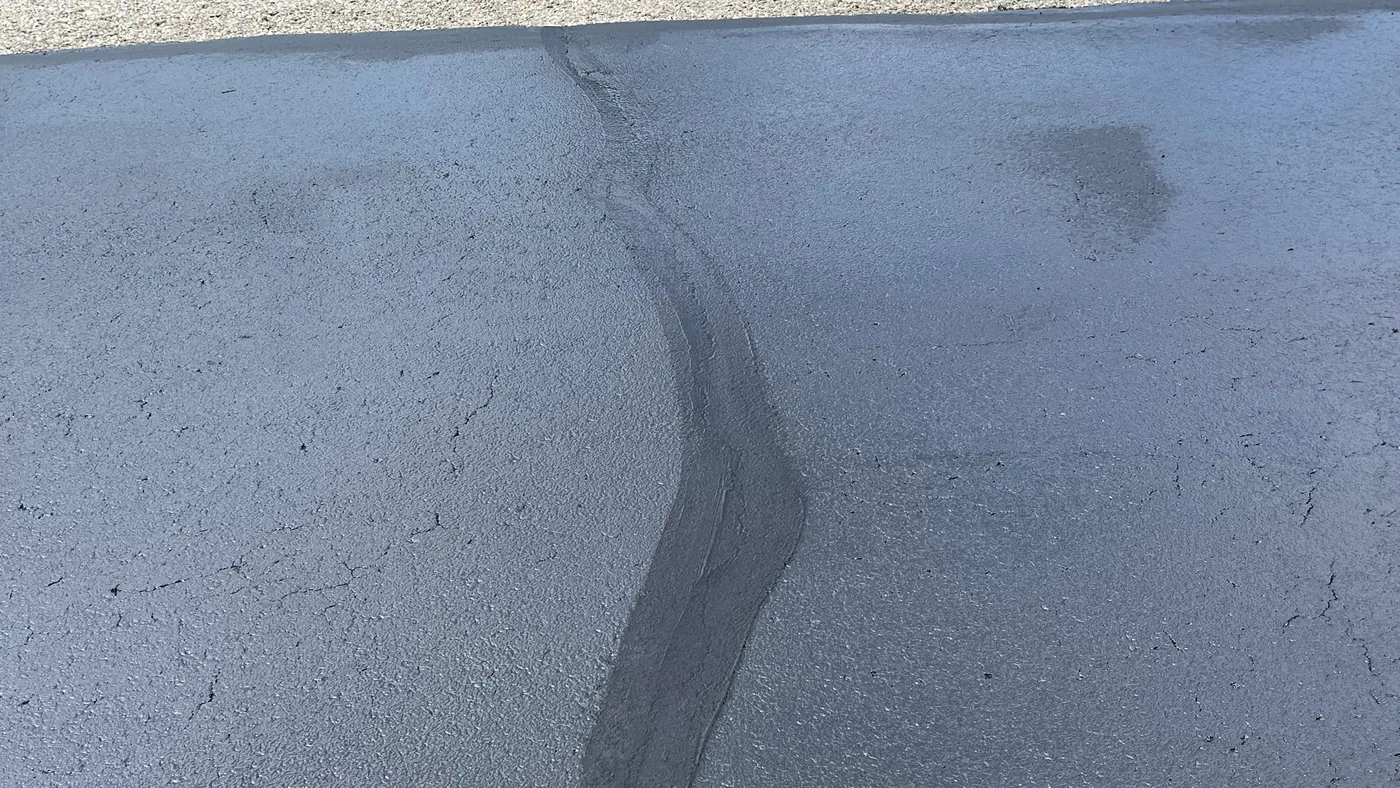
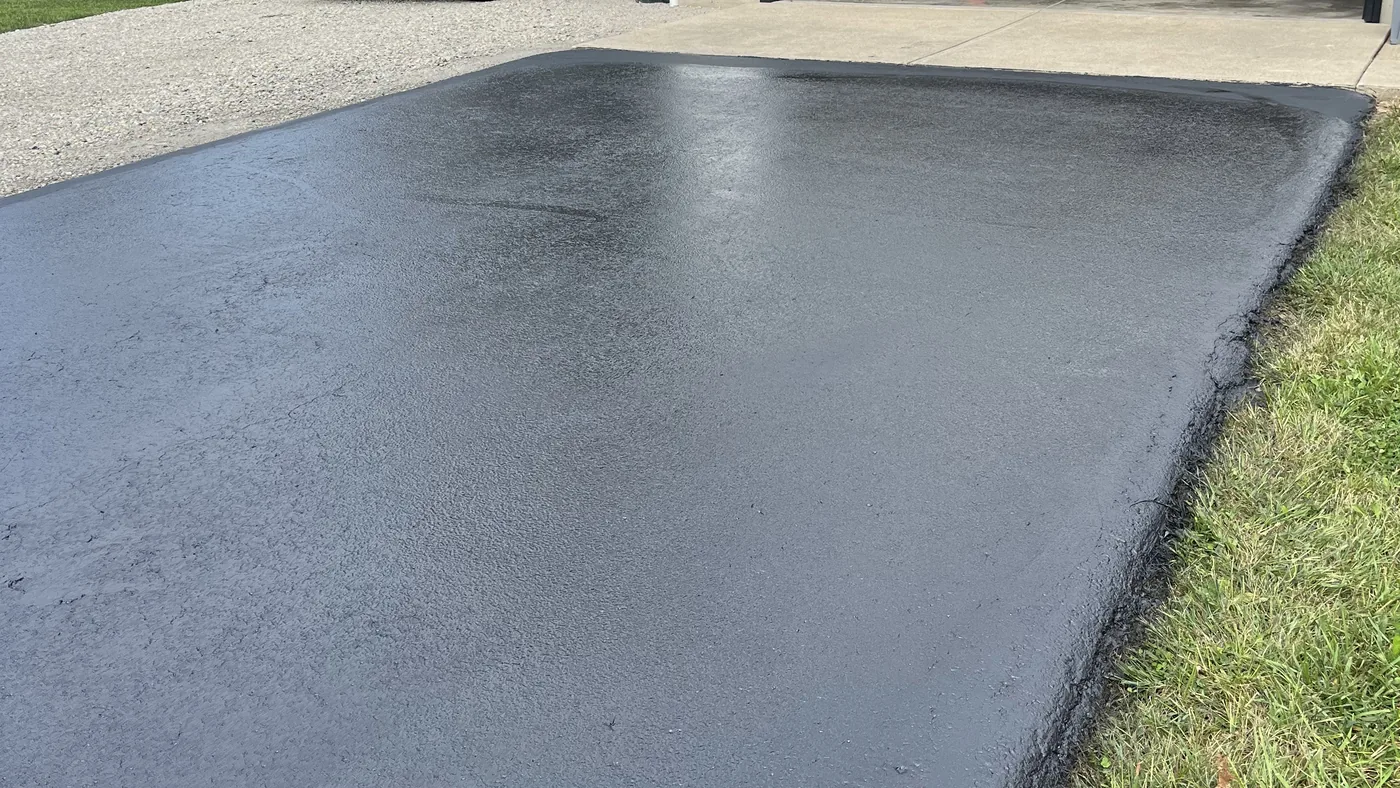
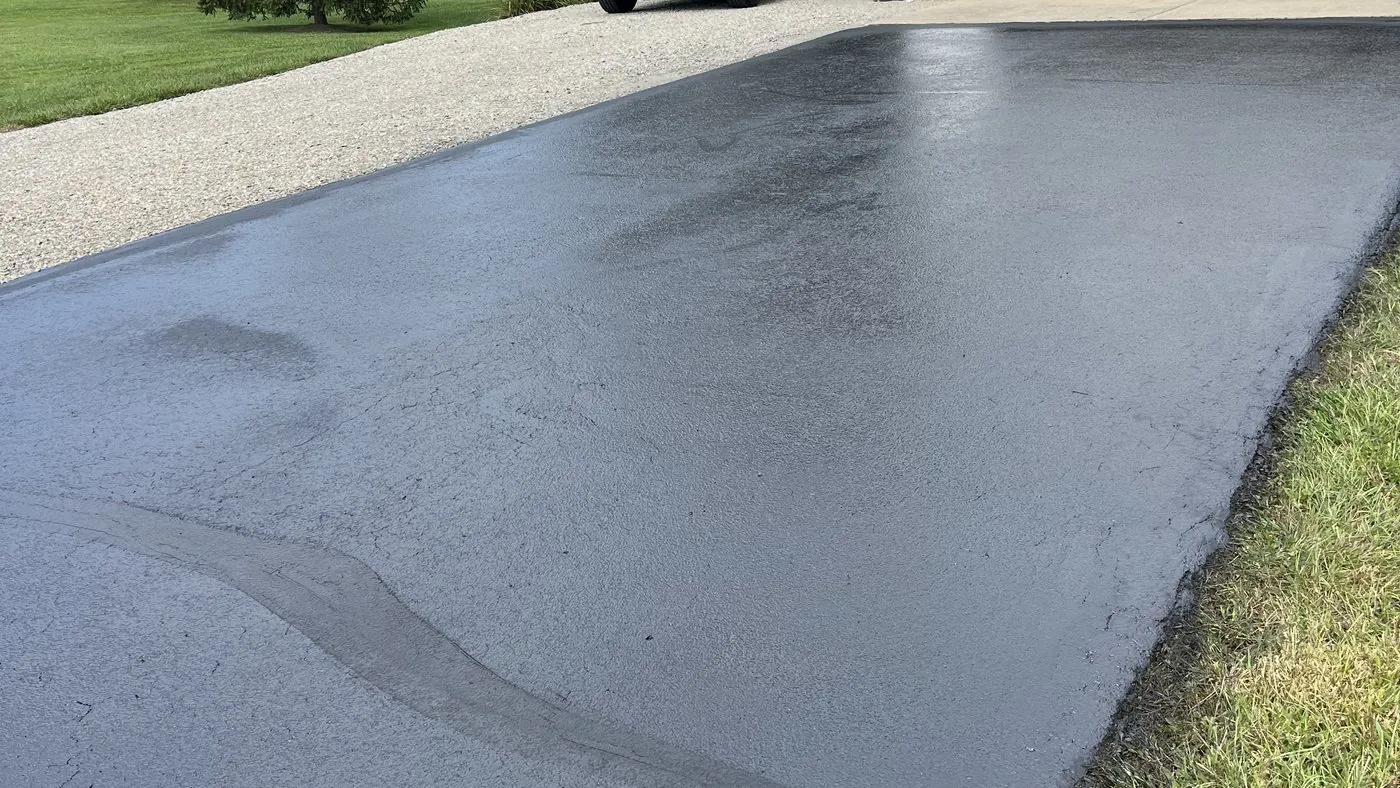
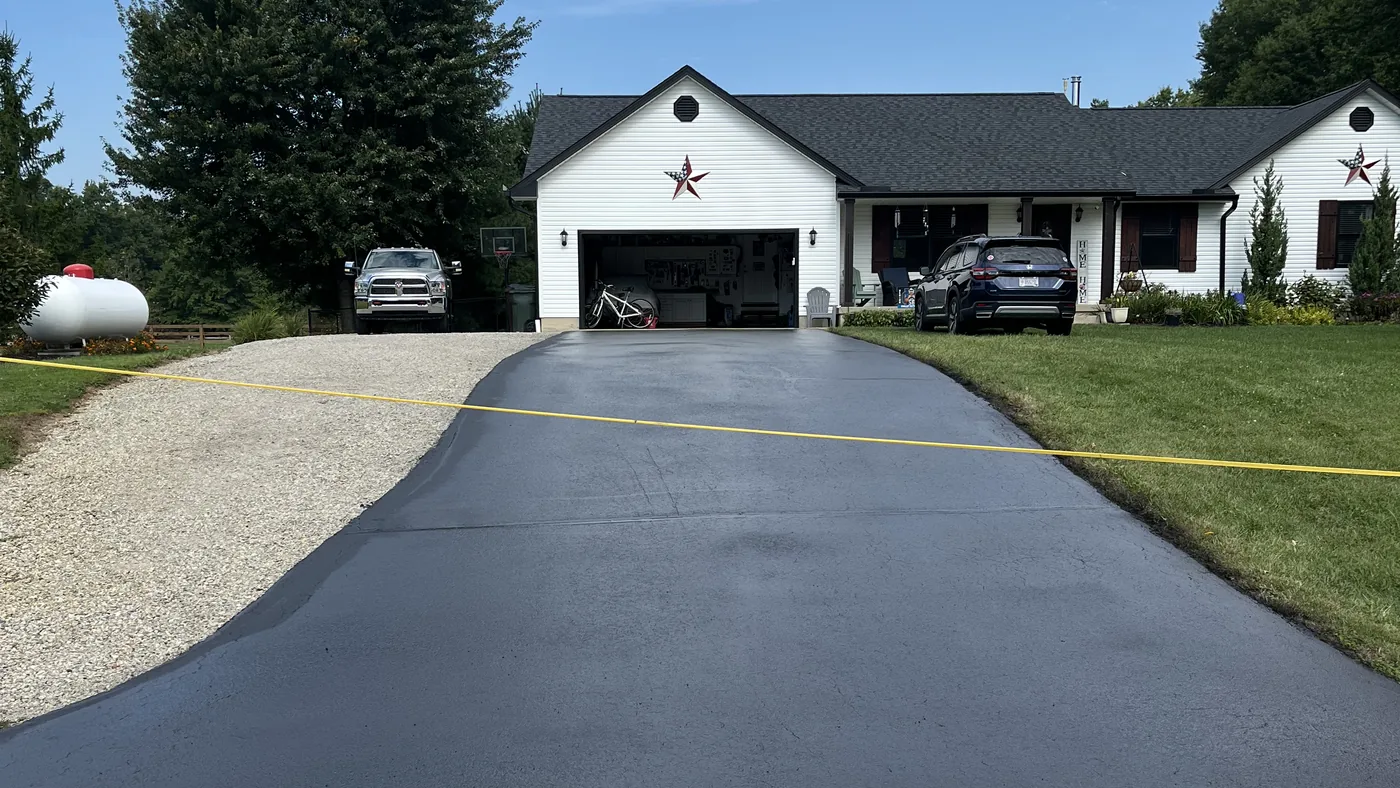
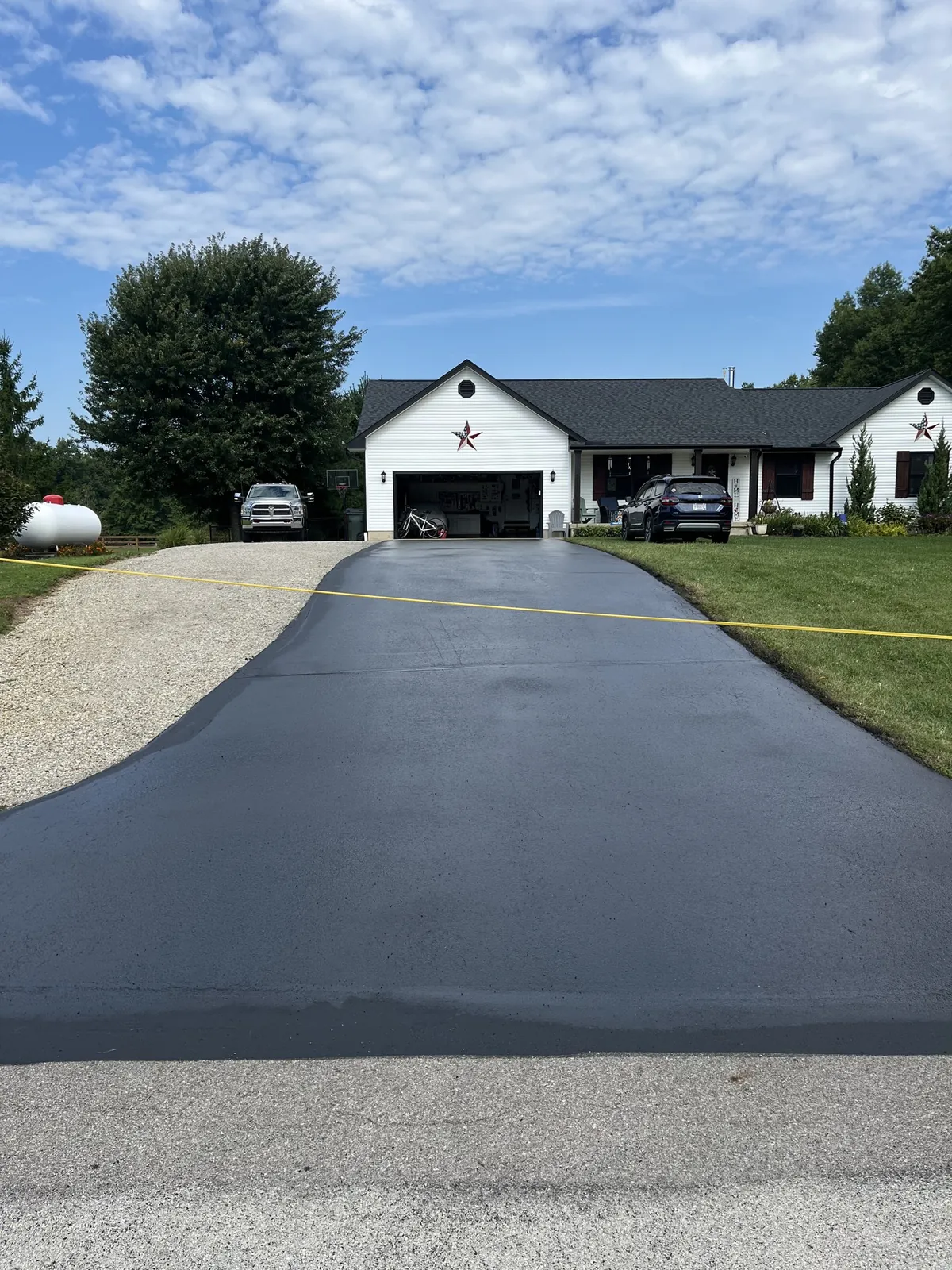
Dayton driveways, the day the coat went down.
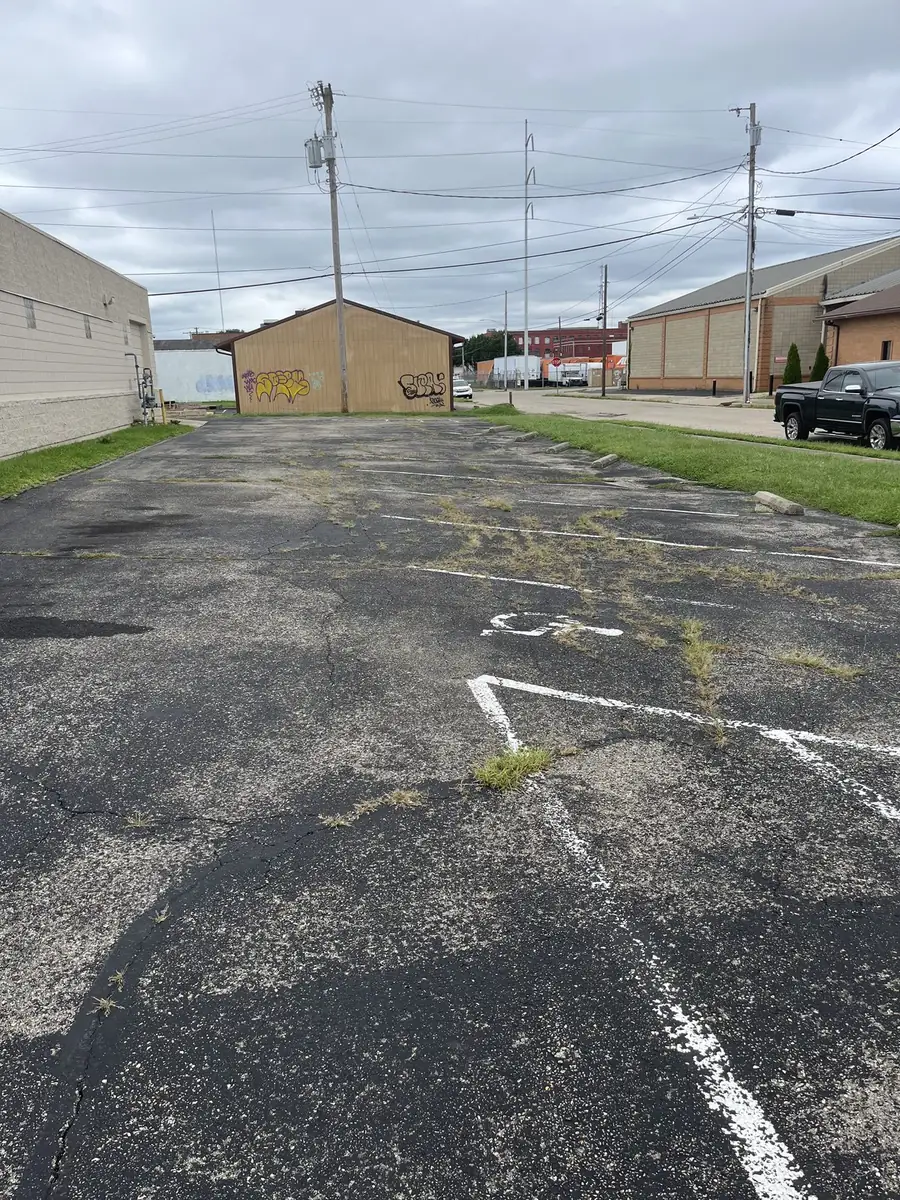
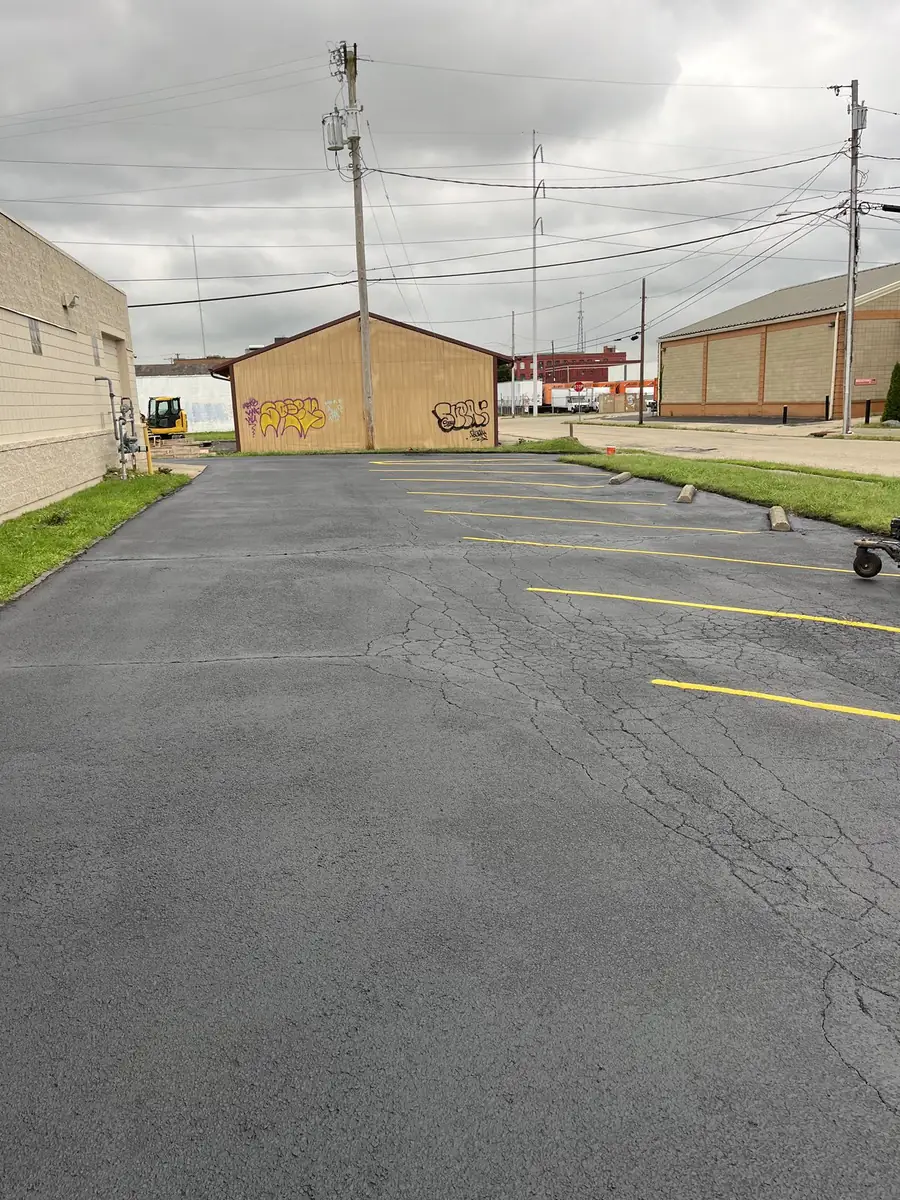
A commercial lot in Dayton, shot from the same spot both times.
Sealer is a surface coat, not a repair. The difference matters.
Sunlight breaks down the binder holding the stone together. That is what turns a black driveway grey, then brittle. A coat of sealer takes the UV instead of the asphalt.
Once the surface opens up, water gets underneath. In the Miami Valley it then freezes, expands, and widens every crack it found, over and over through the winter. Most driveway failure around here starts as a water problem.
Sealer is not a repair. It will not bind a drive that is already crumbling, close a pothole, or hold together alligator cracking where the base has gone. If yours is at that stage we will say so, because sealing it is money wasted.
Two to three years on a residential drive in this climate. Less on one in full sun all day, or where cars turn hard in the same spot. Sealing more often than that is not buying you anything.
It depends on the size of the driveway and what shape it is in. Send the form with your address, we measure the asphalt and read what condition it is in, and you get an exact number back. No pressure visit and no obligation.
Faded gray, water soaking in, or fine cracking means yes. Still black and beading water means it can wait, and we'll tell you that.
Sealer needs sustained temps above 50F. In Dayton that's roughly late April through mid-October.
24 to 48 hours depending on weather. Exact window given at scheduling.
Yes. Crack filling, sometimes called asphalt crack repair, is done first and is included in the price. Sealer is not a filler, so an open crack has to be filled before the coat goes on.
Yes. Crack filling is included in the price. Small areas that have broken up, or a pothole that has opened, get patched before the coat goes on, and the patching shows on the quote. If the asphalt is too far gone for patching, we will tell you it needs an overlay or new asphalt rather than sealing, and we can quote that paving too.
Not yet. New asphalt has to cure before it will take a sealer, and most manufacturers put that at six to twelve months. Sealing it early traps the oils still working their way out. Ask us next season.
Move the cars off it, including anything on the apron, and turn off sprinklers near the drive for the day. That is it.
We move the day. Sealer needs a dry surface going down and dry hours after it. Rain on a fresh coat means doing it again, so we reschedule rather than gamble on the forecast.
Yes. Blacktop and asphalt are the same surface, so blacktop sealing, asphalt sealing and seal coating all describe the same job, and the companies that do it get called sealcoaters or driveway sealers. We seal asphalt driveways and parking pads around Dayton whichever name you use.
No, asphalt only. Concrete takes a different product and it is a different job.
Commercial work across the Miami Valley, quoted and scheduled differently from a driveway.
Sealer needs 24 to 48 hours before vehicles go back on. Lots get split into sections, or run from Friday evening through the weekend, so the property never has to shut. Which one fits depends on when your lot is actually empty.
Sealer covers every marking, so the layout has to go back on. Restriping the existing layout is built into the square foot price, not billed per stall. If the accessible spaces are being repainted they go back to the current specification rather than wherever the old paint sat.
Delivery traffic wrecks a drive lane and a dumpster pad long before it touches the parking bays. Those get walked separately, and if a lane needs repair before sealer you get told that instead of sold a coat over the top.
When sealing is not enough: patches, overlays and new asphalt.
Some driveways are past the point where a coat of sealer helps. Failed spots get cut out and rebuilt, a sound base can take an overlay, and a driveway whose base has gone gets torn out and replaced. You are told which one yours needs, including when the answer is only a patch and a seal.
Under a minute to ask. We measure the asphalt, then you get a real number. Lots come back with the measured area and one price per square foot that covers sealing, crack filling, patching and restriping.
